
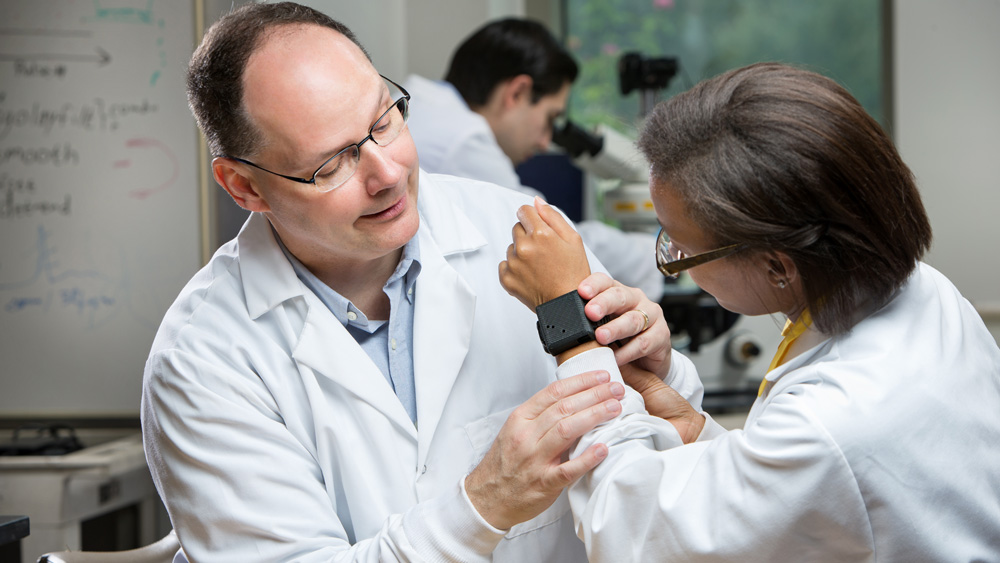
Dr. Gerard Coté, a biomedical engineering professor at Texas A&M University, heads a National Science Foundation-sponsored engineering research center that’s improving the health of underserved communities and recruiting a diverse group of students to continue the work. | Image: Texas A&M Engineering The Precise Advanced Technologies and Health Systems for Underserved Populations (PATHS-UP) ERC has been […]
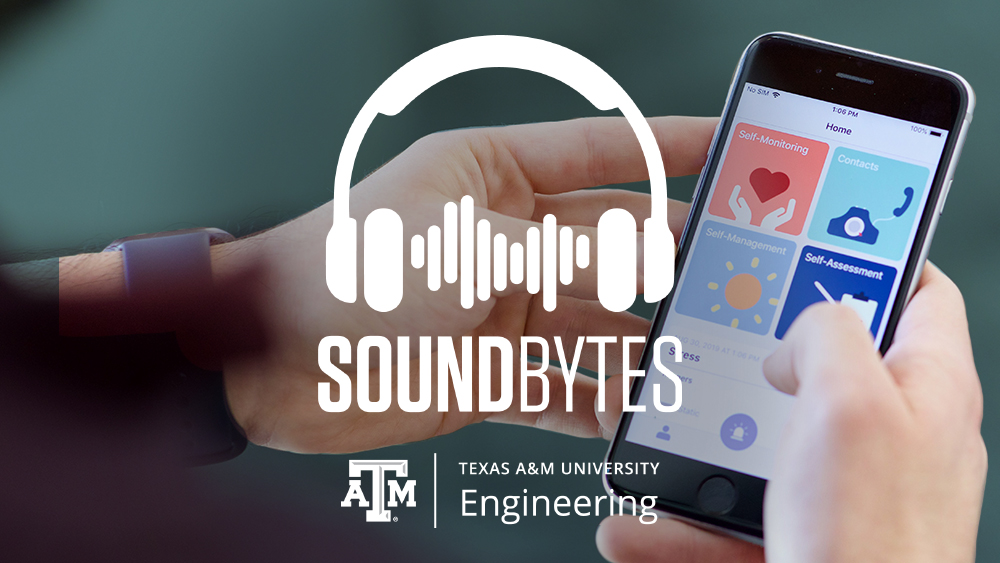
Engineer This!: Improving mental health through mobile technology
Dr. Farzan Sasangohar and his team combined commercial smartwatches with advanced machine learning and a wide range of sensors to detect signs and symptoms of high anxiety to direct users to mental health and self-care resources.
Coté receives Walston Chubb Award for Innovation
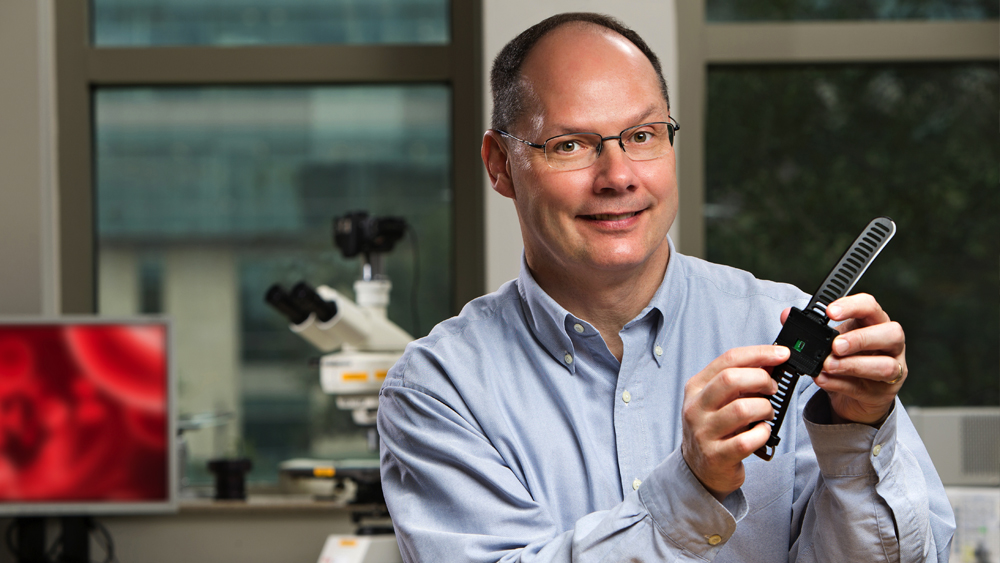
Dr. Gerard Coté received the Walston Chubb Award for Innovation from Sigma Xi, the Scientific Research Honor Society for his leadership in the development of biomedical optical systems for an array of medical applications with clinical impact.
Researchers receive $3.6M grant to continuously monitor blood pressure during sleep
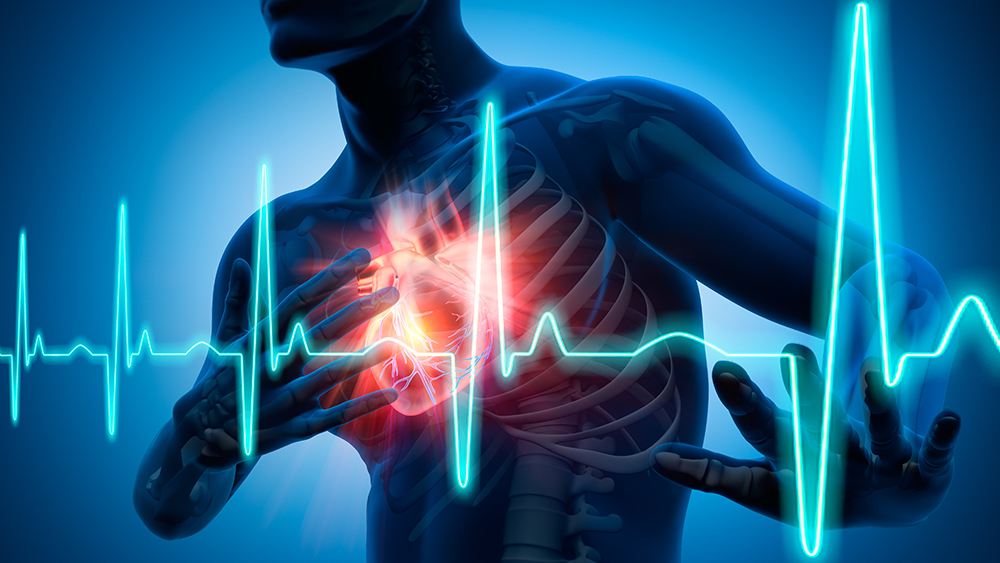
Dr. Roozbeh Jafari and his team from the Center for Remote Health Technologies and Systems have received a $3.6 million grant from the National Institutes of Health to create a device a user can wear all night while asleep for constant blood pressure readings.

New optical biosensor system may help round-the-clock management of gout
Dr. Mike McShane and his team from the Center for Remote Health Technologies and Systems have created a minimally invasive biosensor system that may hold the key to future point-of-care therapies centered around personal management of gout and possibly other conditions.
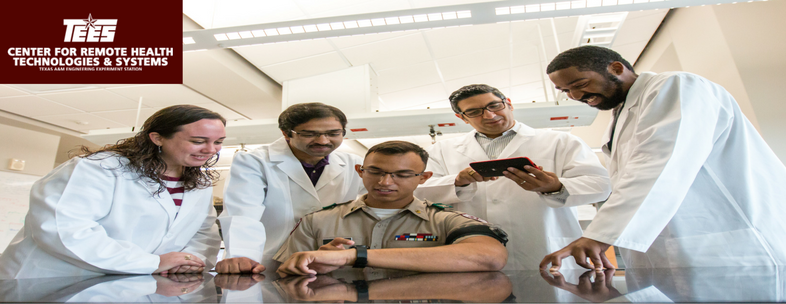
Could Texas A&M-developed app serve vets with PTSD?
Many of our nation’s returning war veterans suffer from post-traumatic stress disorder (PTSD), a psychiatric disorder that can occur after experiencing or witnessing a traumatic event. A team of researchers at Texas A&M University have created an app that could help them manage their condition outside of a clinical setting.
Developing a test for preeclampsia in first trimester
A group of researchers from the College of Medicine, College of Pharmacy and College of Engineering at Texas A&M University are working to develop an affordable and reliable test that can accurately detect preeclampsia within a woman’s first trimester-and possibly reverse it.
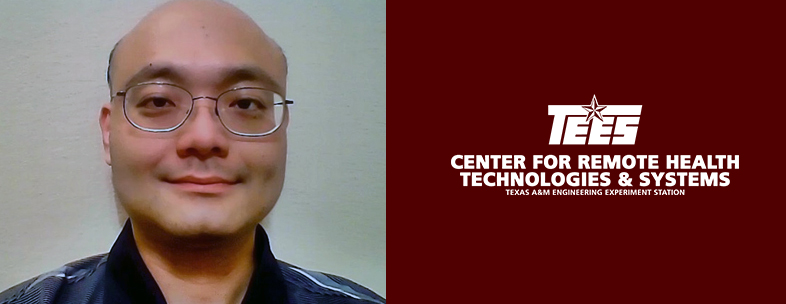
Center Hires Expert in Flexible Electronics
Pao-Tai Lin, an electrical and computer engineer whose research focuses on flexible electronics, has joined the Center for Remote Health Technologies and Systems (CRHTS) at Texas A&M University.
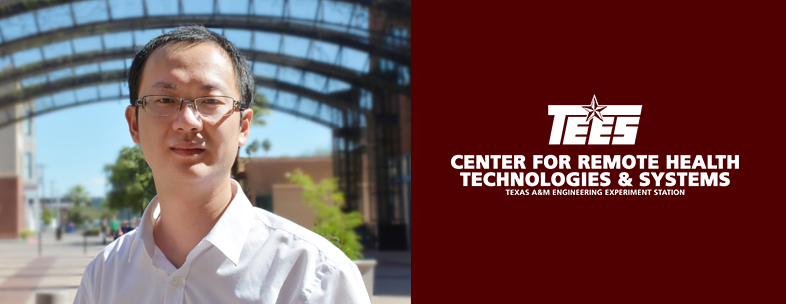
Center Hires Expert in Big Data
Xia Hu, a computer science engineer whose research focuses on big data, has joined the Center for Remote Health Technologies and Systems (CRHTS) at Texas A&M University.